
Un viaggio iniziatico An Initiatory Journey
Arrivo ad Alghero in una sera ventosa, per incontrare degli amici e trascorrere insieme le ultime ore dell'anno.
I arrived in Alghero on a windy evening, meeting friends to spend the final hours of the year together.

Mi dirigo subito sulle mura della città e seguo gli antichi camminamenti; oggi rimangono sette torri cinquecentesche e tre forti, ma il primo sistema di fortificazioni di Alghero risale ai genovesi nel XIII secolo, poi furono i catalani, un secolo più tardi, ad ampliarlo.
I head straight for the city walls, following the ancient ramparts. Today, seven sixteenth-century towers and three forts still stand, but Alghero’s earliest fortifications date back to the Genoese in the thirteenth century, before being expanded by the Catalans a century later.
><
Il mare d’inverno è ancora più magico, oggi il Maestrale imperversa sulla città, non mi stanco di seguire i cambiamenti repentini dello scenario delle nuvole. Il vento poi, lo vivo sempre come un elemento di purificazione da tutte le scorie che ci trasciniamo dietro.
The winter sea is even more magical. Today, the Mistral sweeps through the city, and I never tire of watching the sudden shifts in the clouds above. I have always felt the wind as a purifying force, washing away the clutter we carry within us.

***
Alla fine delle mura, poco dopo la banchina, scopro la libreria Cyrano, con tavolini fuori, e dentro in mezzo agli scaffali, dove leggere o rileggere uno dei libri esposti. Scelgo "Foglie d’erba" di Walt Whitman e lo degusto insieme a un piattino del più buon camembert di capra mai assaggiato, servito con verdurine sott’olio fatte in casa e uno degli ottimi vini sardi della casa.
Cyrano diventerà uno dei miei posti fissi per l’aperitivo di Alghero.
At the end of the walls, just past the quay, I discover the Cyrano bookshop. It has little tables outside, and inside, nestled among the shelves, quiet corners to read or revisit one of the books on display. I choose "Leaves of Grass" by Walt Whitman, savoring it alongside a small plate of the finest goat's camembert I have ever tasted, served with homemade pickled vegetables and one of their excellent local Sardinian wines.
Cyrano will soon become one of my favorite spots for an aperitif in Alghero.
La sera nel borgo, seguiamo la musica che riempie le strade: i concerti sono sui balconi e man mano che ci spostiamo da una piazza all’altra, cambiano i musicisti e la musica.
I bambini ballano, anche qualche adulto; l’atmosfera è frizzante, si respira la festa.
Amo Alghero!
That evening in the old town, we follow the music filling the streets. The concerts are held on balconies, and as we wander from one square to the next, the musicians and the melodies change. Children are dancing, and a few adults too; the atmosphere is sparkling, and you can truly breathe in the celebration.
I love Alghero!
Nella notte continuo a camminare nelle strade deserte, una piccola luna occhieggia tra alberi e luci, è il momento di ascoltare il silenzio per riflettere sulla vita.
“Limpida mezzanotte.
Anima, è l’ora tua, per il libero volo nell’ineffabile. Via dai libri, dall’arte, il giorno cancellato, tutta ne emergi, e in silenzio scruti, considerando i temi che più ami, la notte, il sonno, la morte e le stelle”.
(W. Whitman)
Into the night, I keep walking through the deserted streets, a small moon peeking through trees and lights. It is the time to listen to the silence and reflect on life.
" A clear Midnight
This is thy hour O Soul, thy free flight into the wordless, Away from books, away from art, the day erased, the lesson done, Thee fully forth emerging, silent, gazing, pondering the themes thou lovest best, night, sleep, death and the stars."
(W. Whitman)
Amo la mescolanza di tradizioni culturali e stili architettonici di Alghero, che è stata per più di 400 anni un’enclave catalana. Gli abitanti sardi furono sostituiti dai catalani e ancora oggi i vecchi abitanti di Alghero parlano l’Algherese, un dialetto catalano.
.
I love Alghero’s blend of cultural traditions and architectural styles, having been a Catalan enclave for over four hundred years. The Sardinian inhabitants were replaced by Catalans, and even today, the older residents of Alghero speak Algherese, a Catalan dialect.
Oggi la bella città catalana è in fermento, all’orizzonte invece il profilo di Capo Caccia è avvolto dalla nebbia.
Today, the beautiful Catalan city is buzzing with life, while on the horizon, the silhouette of Capo Caccia is shrouded in mist.

Sto tornando proprio lì, dove l’estate scorsa, sotto il sole cocente, mi immergevo nelle acque profonde di Capo Caccia; ora l’inverno brumoso avvolge il promontorio e lo trasforma in un'ombra tra cielo e mare..
Oltrepassata la laguna del Kalik, nel parco regionale di Porto Conte, arrivo sulla panoramica che attraversa il promontorio: il sole ha fatto la sua ricomparsa e tutto brilla di nuova luce. Il silenzio e questo spazio luminoso sono il luogo perfetto per riflettere su quello che mi lascio alle spalle prima di entrare nel nuovo anno.
I am returning right there where, last summer, under the blazing sun, I would dive into the deep waters of Capo Caccia; now, the misty winter wraps around the promontory, transforming it into a shadow between sky and sea.
Passing the Kalik lagoon in the Porto Conte regional park, I reach the scenic road crossing the promontory: the sun has made its reappearance, and everything shines with a new light. This silence and luminous space are the perfect place to reflect on what I leave behind before entering the new year.

***
La notte, al concerto di capodanno, la folla è un po’ troppo assiepata per il mio senso di claustrofobia; la cena è stata sontuosa ma mi sento straripare, così dopo i tripudi di mezzanotte, lascio gli amici e vado a respirare finalmente sulla spiaggia.
Due ragazzi seduti su una coperta mi fanno un gesto di saluto, mi avvicino, mi invitano a sedermi con loro, accetto. La conversazione vaga dalle inevitabili informazioni ad argomenti via via più astratti e filosofici. Parlando di stelle e di desideri, di scelte esistenziali e di relazioni, non ci accorgiamo che le ore passano e un’alba stupenda ci sorprende un po’ infreddoliti, ma vicini come vecchi amici. Dopo tanto fragore, la prima alba del nuovo anno parla di serenità e speranza: ne abbiamo bisogno tutti noi.
At the New Year's Eve concert, the crowd was a bit too dense for my sense of claustrophobia. The dinner had been sumptuous but I felt completely full, so after the midnight celebrations, I left my friends and went to finally breathe on the beach.
Two young people sitting on a blanket waved a greeting to me; I walked over, they invited me to sit with them, and I accepted. Our conversation drifted from the inevitable exchange of details to increasingly abstract and philosophical topics. Speaking of stars and desires, of existential choices and relationships, we did not notice the hours passing, and a gorgeous dawn caught us a little chilly, yet close like old friends. After so much noise, the first sunrise of the new year spoke of serenity and hope: a need we all share.

***
Oggi, mi scaldo al sole primaverile sulla spiaggia di Alghero, mentre aspetto che i miei amici mi raggiungano mi sorprende un cavaliere a cavallo che esce dall’acqua e mi passa accanto. Ho un flash back delle mie galoppate sulla spiaggia di Djerba in Tunisia, tanti anni fa, e quelle nella foresta a Parigi quando vivevo lì; dobbiamo usare il tempo e non lasciare che scivoli via. L’ho capito tardi, ma non troppo per fortuna, che non bisogna aver paura di mollare tutto e saltare nel vuoto. Cambiare vita si può. La mia Nuova Vita è già cominciata qualche tempo fa e non me ne sono mai pentita.
Today, I warm myself in the spring-like sun on the beach of Alghero. While waiting for my friends to join me, I am surprised by a rider on horseback emerging from the water and passing right by me. I have a flashback of my gallops on the beach of Djerba in Tunisia, many years ago, and those in the forest in Paris when I lived there; we must use time and not let it slip away. I realized it late, but luckily not too late, that we must not be afraid to let go of everything and leap into the void. Changing your life is possible. My New Life already began some time ago, and I have never regretted it.

***
In rotta verso Capo Caccia, all’interno dell’incontaminato parco naturalistico di Porto Conte, passo davanti a un villaggio nuragico complesso e decido di andare a visitarlo:
è il nuraghe di Palmavera.
En route to Capo Caccia, within the pristine nature reserve of Porto Conte, I pass by a complex Nuragic village and decide to visit it: the Nuraghe of Palmavera.

Poco lontano dalla baia che i romani chiamavano porto delle Ninfe, si trova questo villaggio nuragico la cui costruzione viene fatta risalire all’età del bronzo (XV-XIV secolo a.C.), e che venne poi ampliato in quella del ferro (IX-VIII secolo a.C.). Per la grandiosità dei suoi resti é considerato uno dei più importanti nuraghi tra gli ottomila che si contano in Sardegna.
Not far from the bay the Romans used to call the Port of the Nymphs, lies this Nuragic village whose construction dates back to the Bronze Age (fifteenth to fourteenth century BC), and which was later expanded during the Iron Age (ninth to eighth century BC). Due to the grandeur of its remains, it is considered one of the most important nuraghi among the eight thousand found across Sardinia.

Composto da blocchi di calcare e arenaria, il complesso oggi ha un imponente corpo centrale con due torri, un muro di cinta e una cinquantina di capanne del villaggio, che si stima fossero in origine 150-200.
Non mi era mai capitato di visitare un nuraghe così complesso e ne sono totalmente affascinata.
Built from limestone and sandstone blocks, the complex today features an impressive central structure with two towers, a curtain wall, and about fifty village huts, which are estimated to have originally numbered between 150 and 200.
I had never visited such a complex nuraghe before, and I am completely spellbound by it.

In fase di costruzione, la torre principale fu realizzata con grossi massi in calcare, nella fase successiva invece venne aggiunta una seconda torre realizzata in blocchi di arenaria, come pure la capanna delle riunioni, con al centro un sedile rotondo in pietra, forse per il capo, accanto a una nicchia nella parete. Nella terza fase, infine, venne costruito intorno al nuraghe un muro di cinta esterno con quattro torri-capanne.
During construction, the main tower was built using large limestone boulders, while in the following phase, a second tower made of sandstone blocks was added, along with the meeting hut, which features a round stone seat at its center, perhaps for the leader, next to a niche in the wall. Finally, in the third phase, an outer curtain wall with four tower-huts was constructed around the nuraghe.


Mentre cammino tra le pietre già dorate dall’imminente tramonto, cerco di immaginare come fosse la Sardegna nell’età del bronzo quando iniziò questa costruzione. L’isola doveva essere ricoperta da foreste ricche di selvaggina e i suoi mari ricchi di pesci.
Molti giacimenti di ossidiana, il vero oro nero di quel periodo storico, permettevano la fabbricazione di utensili e armi, una merce preziosa che veniva scambiata anche in luoghi lontani.
As I walk among the stones already golden from the impending sunset, I try to imagine what Sardinia was like in the Bronze Age when this construction began. The island must have been covered in forests teeming with game, and its seas rich with fish.
Many deposits of obsidian, the true black gold of that historical period, allowed for the crafting of tools and weapons, a precious commodity traded even in far-off lands.

Credo che l’età del bronzo con il passaggio alla civiltà nuragica sia stato un momento cruciale della storia sarda, Nella stele di Nora, che risale allo stesso periodo, gli Shardana vengono nominati, con il nome con cui i Fenici chiamavano la Sardegna: B SHRDN.
Anche nei documenti egizi della XVIII dinastia, (XVI-XIV sec. a.C.), in un'iscrizione incisa in una stele viene citata questa popolazione e descritte le loro incursioni sulle coste egiziane: “I ribelli Shardana che nessuno ha mai saputo come combattere, arrivarono dal centro del mare navigando arditamente con le loro navi da guerra, nessuno è mai riuscito a resistergli".
I believe that the Bronze Age, with the transition to the Nuragic civilization, was a crucial moment in Sardinian history. On the Nora Stele, which dates back to the same period, the Shardana are mentioned by the name the Phoenicians used for Sardinia: B SHRDN.
Even in Egyptian documents of the eighteenth dynasty (sixteenth to fourteenth century BC), an inscription carved onto a stele mentions this population and describes their incursions on the Egyptian coasts: “The rebel Shardana whom no one has ever known how to fight, arrived from the center of the sea, sailing boldly in their warships, and no one has ever been able to withstand them.”

Nell'età del bronzo, l'isola era frequentata da mercanti micenei e orientali, forse gli Shardana furono stimolati a diventare guerrieri/pirati e a navigare verso l’Egitto, la Grecia, forse anche la Cornovaglia e l’Africa nera, per migliorare il proprio tenore di vita o per quell’eterna pulsione umana alla conquista e al potere.
During the Bronze Age, the island was frequented by Mycenaean and Eastern merchants. Perhaps the Shardana were driven to become warriors/pirates, sailing toward Egypt, Greece, and possibly even Cornwall and Black Africa, to improve their standard of living or out of that eternal human urge for conquest and power.

Mi allontano dal sito archeologico chiedendomi se le ultime tesi sulla civiltà nuragica, scaturite anche dalla traduzione di una stele trovata a sud di Alghero, dove si parla di un insediamento urbano posto in direzione del mare aperto, dimostreranno che la storia sarda sia addirittura antecedente a quella Sumera.
I leave the archaeological site wondering whether the latest theories on the Nuragic civilization—sparked also by the translation of a stele found south of Alghero, which mentions an urban settlement facing the open sea—will prove that Sardinian history predates even that of the Sumerians.

Rimane il grande mistero sulla funzione dei nuraghi, l’ipotesi più diffusa è che fossero una specie di santuari, come dimostrerebbe anche quella sorta di rispetto reverenziale che in Sardegna ancora oggi si nutre nei loro confronti. In fondo, le campagne sarde sono piene di ovili e pinnettas costruiti a ridosso dei nuraghi, ma mai ricavati dentro di essi come sarebbe stato più comodo.
The great mystery surrounding the function of the nuraghi remains. The most widespread hypothesis is that they were a kind of sanctuary, as demonstrated by the sort of reverent respect that people in Sardinia still hold for them today. After all, the Sardinian countryside is filled with sheepfolds and pinnettas built right against the nuraghi, but never created inside them, even though that would have been far more convenient.

***
Il giorno della partenza da Alghero non so ancora che questa giornata mi sta portando in un luogo che darà un senso profondo al mio viaggio. Un'esperienza che ho definito un viaggio iniziatico perché ha cambiato la mia percezione della vita e ha portato una significativa trasformazione interiore.
On the day of my departure from Alghero, I do not yet know that this day is leading me to a place that will give a profound meaning to my journey. An experience I have called an initiatory journey because it changed my perception of life and brought about a significant inner transformation.

E’ stato a metà strada verso casa, nei pressi di Bono, che la natura del Goceano, la piccola regione storica al centro del nord della Sardegna, mi ha spinto a fermarmi. Qui i prati brillano di verde e gli animali si muovono liberi nella campagna.
It was halfway home, near Bono, that the nature of Goceano—the small historical region in the center of northern Sardinia—compelled me to stop. Here, the meadows glow with green, and animals roam freely across the countryside.


Le rocce, che risalgono al periodo geologico più antico, il Cambriano, quando le uniche forme di vita erano nell’acqua, sembrano ora mura, ora castelli, o anche casette circondate dagli alberi. Ovunque silenzio, profumi di agrifoglio e alberi che si direbbero abitati.
The rocks, dating back to the oldest geological period, the Cambrian, when the only forms of life were in the water, now look like walls, then castles, or even little houses surrounded by trees. Everywhere, there is silence, the scent of holly, and trees that seem as though they are inhabited.


Trovata rapidamente una base da cui muovermi, in una casetta carina circondata da un giardino di piante grasse e rose gialloarancio fiorite, mi dirigo verso la Foresta di Burgos. Seguo la freccia Foresta di Burgos convinta che mi porterà a una foresta, invece il viale alberato conduce a una chiesetta campestre in stile neomedioevale, San Salvatore.
Having quickly found a base to move from, in a lovely little house surrounded by a garden of succulents and blooming yellow-orange roses, I head toward the Forest of Burgos. I follow the sign for the Forest of Burgos, convinced it will lead me to a forest, but instead, the tree-lined avenue brings me to a small countryside church in a neo-medieval style, San Salvatore

La pace e il cinguettio delle chiese campestri si anima di voci umane solo una volta all’anno per la festa del santo, quando tutto il borgo accorre a festeggiarlo.
Intorno alla chiesa, delle palazzine abbandonate di cui la natura si sta riappropriando, fanno riflettere sull’implacabile potere delle piante e sulla mutevolezza dei destini umani. Più tardi mi diranno che un centro di allevamento di cavalli per polizia e carabinieri risiedeva proprio in quegli edifici, costruiti allo scopo nel 1906 e abbandonati nel 1959.
The peace and chirping of the countryside churches come alive with human voices only once a year for the saint's feast day, when the entire village gathers to celebrate.
Around the church, abandoned buildings being reclaimed by nature prompt reflection on the relentless power of plants and the mutability of human destinies. Later, I would be told that a horse-breeding center for the police and carabinieri once resided in those very buildings, constructed for that purpose in 1906 and abandoned in 1959.

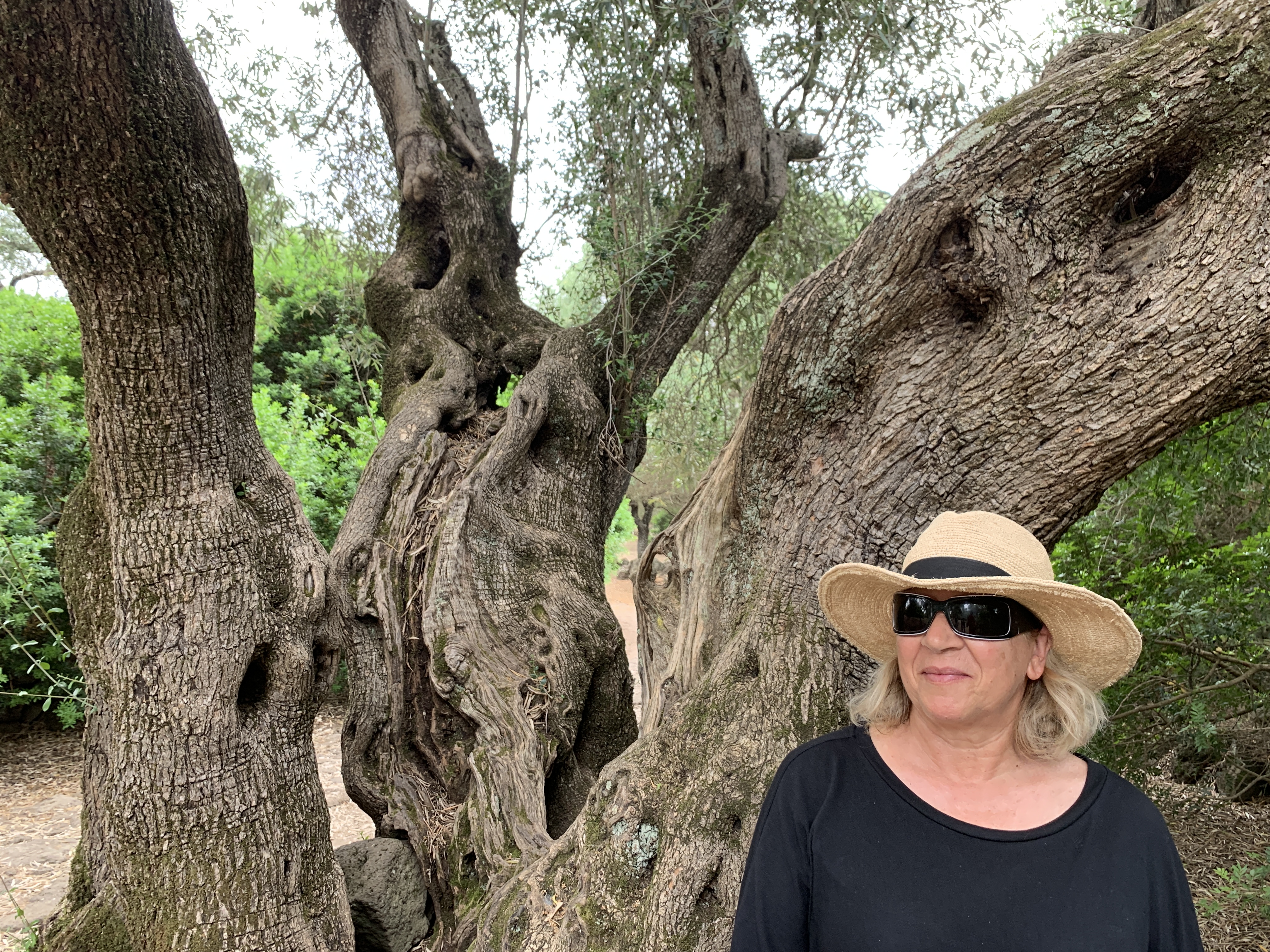
Quello che amo delle chiese campestri è anche il fatto che c’è sempre qualche albero centenario nei dintorni, forse risparmiato proprio per la sua posizione. Ecco infatti un leccio solenne e grandioso; mentre il crepuscolo arrossa ogni cosa, mi siedo sotto i suoi rami possenti a guardare un aereo che attraversa un arco di nuvole.
What I love about countryside churches is also that there is always some centenarian tree nearby, perhaps spared precisely because of its location. And here indeed is a solemn, majestic holm oak; as the twilight turns everything red, I sit beneath its powerful branches watching a plane cross an arch of clouds.


***
In cima a una rupe granitica a 650 mt. d’altezza, visibile ovunque, il castello di Burgos domina la valle. Un tempo, praticamente inespugnabile, era il centro della vita di corte medioevale sarda ed è sicuramente il più ricco di storia tra i tanti castelli costruiti in Sardegna, purtroppo al suo nome sono legate anche le tristi storie di due principesse.
Perched high on a granite cliff 650 meters up, visible from everywhere, the castle of Burgos dominates the valley. Once practically impregnable, it was the center of Sardinian medieval court life and is undoubtedly the richest in history among the many castles built in Sardinia, though sadly, the tragic stories of two princesses are also tied to its name.

Sto camminando sulla salita ripida che porta al castello, ho il sole negli occhi ma mi fermo per fare una foto, un'irruzione improvvisa nella luce mi lascia senza fiato: un cavallo completamente bianco con un nitrito possente e si impenna a pochi passi da me, poi sparisce velocemente come è apparso. Lo segue un altro cavallino pezzato e molto più tranquillo che si allontana sul crinale del monte. Più tardi mi diranno che questi due cavalli vivono liberi qui e non è difficile incontrarli.
Il Goceano è una regione abbondante di erba che consente l'allevamento del bestiame su grande scala: ovini, bovini, suini, equini. Per questo la pastorizia, più ancora della agricoltura, costituisce la maggiore occupazione della gente qui.
I am walking up the steep climb that leads to the castle, the sun in my eyes, but I stop to take a photo. A sudden intrusion into the light leaves me breathless: a completely white horse lets out a powerful neigh and rears up just a few paces from me, then vanishes as quickly as it appeared. It is followed by another little piebald horse, much calmer, which walks away along the mountain ridge. Later, I would be told that these two horses live free here and that encountering them is not uncommon.
The Goceano is a region abundant with grass, allowing for large-scale livestock farming: sheep, cattle, pigs, and horses. For this reason, pastoralism, even more than agriculture, constitutes the main occupation of the people here.
Il castello di Burgos é stato edificato nel 1100 e fino al 1500, quando venne abbandonato dagli aragonesi che lo avevano conquistato ai genovesi, le guerre si susseguirono. Nel 1194, il giudice cagliaritano Guglielmo I dopo aver preso d’assalto il castello, stuprò la moglie del giudice di Torres, la catalana Prunisinda che morì poco dopo. Dopo qualche decennio, anche Adelasia di Torres, dopo la cattura del marito da parte dei bolognesi, si ritiro’ nel castello in prigionia volontaria fino alla sua morte. Queste storie e altri episodi sono immortalati a perenne ricordo in un murales nel borgo di Burgos, ai piedi del castello.
The castle of Burgos was built in the twelfth century, and until the sixteenth century, when it was abandoned by the Aragonese who had captured it from the Genoese, wars followed one after another. In 1194, the Giudice of Cagliari, William I, after storming the castle, violated the wife of the Giudice of Torres, the Catalan Prunisinda, who died shortly after. A few decades later, Adelasia of Torres also withdrew to the castle in voluntary imprisonment until her death, following her husband's capture by the Bolognese. These stories and other events are immortalized as a lasting memory in a mural in the village of Burgos, at the foot of the castle.
Maledetti siano nei secoli dei secoli gli uomini che violentano le donne!
Cursed for ever and ever be the men who violate women!
***
Stamattina mi sono svegliata dopo un sonno tormentato da incubi orribili che mi hanno fatto svegliare in piena notte. Tutte le donne della mia famiglia fanno da sempre sogni premonitori e quando mi avvio in auto verso la mia prossima meta non sono affatto tranquilla, ancora ignoro cosa succederà in questo giorno e quanto sarà importante per me.
This morning I woke up after a sleep tormented by horrible nightmares that made me wake up in the middle of the night. All the women in my family have always had premonitory dreams, and as I set off by car toward my next destination, I am not at all at peace; I am still unaware of what will happen today and how important it will be for me
><
Sulla strada verso la foresta che voglio visitare, devo frenare dopo una curva per non investire un cucciolo tutto bianco che fermo in mezzo alla strada si guarda intorno: è evidente che stia aspettando qualcuno. Mi fermo subito, il cucciolo seguito da un altro cagnolino ancora più piccolo si avvicinano ad annusarmi, ma non sono io la persona che aspettano. Devo cercare di farli spostare dalla curva un po’ più avanti sul rettilineo. Per fortuna porto sempre con me del cibo per i tanti, troppi, cani e gatti randagi che ci sono in Sardegna.
On the road to the forest I want to visit, I have to brake after a bend to avoid hitting a completely white puppy standing in the middle of the road, looking around: it is clear that he is waiting for someone. I stop immediately; the puppy, followed by another even smaller dog, comes over to sniff me, but I am not the person they are waiting for. I must try to get them to move from the bend a bit further down the straight stretch. Fortunately, I always carry food with me for the many, far too many, stray dogs and cats in Sardinia.

Con la ciotola di cibo riesco a farmi seguire dai due cuccioli, sono affamati, divorano in fretta il cibo e bevono tutta l’acqua, poi si placano un po’ sull’erba ai bordi della strada, il cucciolo bianco rassicura quello più piccolo dandogli dei colpetti con il muso.
With the bowl of food I manage to get the two puppies to follow me, they are hungry, they quickly devour the food and drink all the water, then they calm down a bit on the grass by the roadside, the white puppy reassures the smaller one giving him pokes with the snout.
Vedo una macchina ferma poco lontano, è un funzionario pubblico, mi dice che è di un’altra regione e non può fare nulla, ma mi indica, a qualche chilometro, la caserma della Forestale di Monte Pisanu. Penso che la cosa migliore sarebbe di portare i due cuccioli da loro e provo a prenderli, ma è troppo rischioso perché per non farsi avvicinare, scappano in mezzo alla strada. Li lascio tutti e due seduti nell’erba, accanto alle ciotole, un po’ lontani dalla strada e mi dirigo verso la caserma dei forestali.
I see a car parked a short distance away; it is a public official. He tells me he is from another region and can do nothing, but he points out the Monte Pisanu Forestry Corps station a few kilometers away. I think the best thing would be to take the two puppies to them and I try to catch them, but it is too risky because, to avoid being approached, they run into the middle of the road. I leave them both sitting in the grass, next to their bowls, a little way from the road, and head toward the forestry station.
Quando supero il cancello, un gruppetto di cuccioli mi viene incontro, sono molto simili a quelli che ho lasciato; mi dicono che spesso i forestali li raccolgono dalla strada.
Il custode chiama un dirigente a cui chiedo di aiutarmi a prendere i due cagnolini che ho lasciato per strada. Purtroppo, ha appena messo delle gocce di atropina negli occhi e sta andando da un dottore per la visita, ma vedrà cosa può fare al ritorno. Gli chiedo una mappa per arrivare all’area protetta di Sos Nibberos. Mi guarda con rammarico, non esiste una mappa e non è facile arrivarci, di fronte alla mia perplessità decide di accompagnarmi lui alle porte della foresta di tassi centenari e millenari (Taxus baccata) più grande d’Italia
.
When I pass the gate, a small group of puppies runs out to meet me, looking very similar to the ones I left behind; I am told that the forestry rangers often rescue them from the road.
The caretaker calls a manager, whom I ask to help me rescue the two little dogs I left on the road. Unfortunately, he has just put atropine drops in his eyes and is on his way to a doctor's appointment, but he says he will see what he can do upon his return. I ask him for a map to reach the protected area of Sos Nibberos. He looks at me with regret; no map exists and it is not easy to get there. Seeing my hesitation, he decides to accompany me himself to the gates of the largest forest of centenarian and millenarian yew trees (Taxus baccata) in Italy.

La strada non è semplice da individuare, dopo aver deviato in una strada sterrata, cerco di memorizzare le svolte di ogni bivio, spero di ricordarmele quando tornerò sulla strada asfaltata. Infine una salita e ci fermiamo. Domenico, si chiama così il forestale gentile che mi ha accompagnato, mi fornisce molte informazioni sulla foresta, gli chiedo di farsi fare una foto accanto a uno dei primi tassi del sentiero e poi ci salutiamo.
Con il naso all’insù, proseguo osservando i grandi alberi che delimitano il sentiero, ma come mi ha detto Domenico, i più antichi sono accanto al ruscelletto, in basso nella discesa oltre i cespugli spinosi. Lascio il sentiero e mi ci dirigo.
The road is not easy to find. After turning onto a dirt track, I try to memorize the turns at every junction, hoping I will remember them when I head back to the paved road. Finally, a climb, and we stop. Domenico, as the kind forest ranger who accompanied me is named, shares a wealth of information about the forest. I ask to take a photo of him next to one of the first yew trees along the path, and then we say goodbye.
With my eyes turned upward, I continue, observing the great trees that line the path. But as Domenico told me, the oldest ones are down by the stream, at the bottom of the slope beyond the thorny bushes. I leave the path and head straight there.

Mentre procedo in discesa, su un terreno di fango e pietre molto scivoloso, percepisco per la prima volta, una sensazione di pericolo; eppure ho attraversato da sola molti boschi e foreste nella mia vita.
As I make my way down, over muddy and treacherous rocks, I sense a feeling of danger for the very first time; yet, I have walked through many woods and forests alone in my life.

Man mano che avanzo, cerco una parola per definire l’energia di questi alberi e di questo luogo e capisco senza alcun dubbio di essere in una “foresta arcana”. E' uno spazio questo che nasconde forze misteriose e un’essenza, una verità nascosta.
As I move forward, I search for a word to define the energy of these trees and this place, and I understand without any doubt that I am in an "arcane forest." This is a space that conceals mysterious forces and an essence, a hidden truth.

Non solo la grandezza e la forma del tronco, ma anche l'altezza di questi tassi è davvero impressionante. Sono alberi che non conosco e stranamente mi intimidiscono.
Not only the size and shape of the trunk, but also the height of these yew trees is truly impressive. These are trees I do not know, and strangely, they intimidate me.


I tassi crescono lentamente ma sono tra gli alberi più longevi, alcuni possono raggiungere dai tre ai cinquemila anni. Il legno violaceo sorge dal terreno come se fosse fatto di grosse funi, si torce e assume le forme più svariate. E' un legno robusto ma elastico, gli antichi lo usavano per costruire archi e frecce; era una lancia di tasso quella ritrovata fra le costole dello scheletro di un mammut risalente a 50.000 anni fa, come pure la famosa mummia ritrovata nel ghiacciaio del Similaun, era munita di arco e frecce di tasso.
Con il tempo la corteccia si desquama in placche in rilievo, sottili come carta,
Not only the size and shape of the trunk, but also the height of these yew trees is truly breathtaking. These are trees I do not know, and strangely, they intimidate me.
Yew trees grow slowly but are among the longest-lived trees, with some capable of reaching three to five thousand years of age. The purplish wood rises from the ground as if made of thick ropes, twisting and taking on the most diverse shapes. It is a sturdy yet flexible wood, which ancient people used to make bows and arrows; a yew spear was found between the ribs of a mammoth skeleton dating back 50,000 years, and the famous mummy discovered in the Similaun glacier was also equipped with a yew bow and arrows.
With time, the bark flakes off in raised plates, thin as paper,


Il tasso è soprattutto una delle piante più velenose presenti sul territorio italiano: ogni parte dell'albero contiene la tassina, una sostanza altamente tossica che provoca il decesso improvviso per paralisi cardiaca o respiratoria. Per questo i tassi sono chiamati alberi della morte, per gli antichi Celti invece, erano un simbolo di rinascita e di eternità.
The yew is, above all, one of the most poisonous plants found in Italy: every part of the tree contains taxine, a highly toxic substance that causes sudden death through cardiac or respiratory paralysis. For this reason, yews are known as trees of death, yet for the ancient Celts, they were a symbol of rebirth and eternity.


Continuo a scendere nella scarpata per raggiungere gli alberi più sorprendenti, sono completamente rapita: quelli più antichi sono quasi completamente ricoperti di muschio e licheni.
I continue to make my way down the slope to reach the most astonishing trees, I am completely spellbound: the oldest ones are almost entirely covered in moss and lichens.


Continuo a camminare, ogni nuovo albero che scopro mi emoziona; questi tassi dalle forme strane, ognuna diversa dalle altre, sono sorprendenti. Mi avvicino al tronco di ogni albero, lo sfioro, lo annuso, lo fotografo, subito attratta da un altro tasso un po’ più, continuo a scendere, il tempo non esiste, la gioia è immensa, una foresta che lascia senza fiato.
I keep walking, and every new tree I discover fills me with emotion; these yew trees with their strange shapes, each one different from the next, are amazing. I approach the trunk of each tree, lightly touching it, breathing in its scent, taking photos, immediately drawn to another yew a bit further on. I continue to make my way down, time does not exist, the joy is immense—a forest that leaves you breathless.

A un certo punto mi fermo e guardando l’infinita e ripida salita davanti a me, ritorno alla realta', mi chiedo dove sono e da dove sono arrivata. Accendo il telefonino, non c’è campo.
At a certain point I stop, and looking at the endless, steep climb ahead of me, I return to reality, wondering where I am and which way I came from. I turn on my phone; there is no signal.
A quel punto non so bene cosa sia successo, forse non dovevo toccare la corteccia dei tassi, perché all'improvviso il cuore comincia a battere fortissimo, mi sembra che mi esploda nel petto e una nausea fortissima mi fa vacillare. Penso di sdraiarmi per terra sul terreno coperte di foglie prima di svenire, invece mi appoggio a un tasso accanto a me, chiudo gli occhi, ascolto il mio respiro.
At that point, I do not quite know what happened; perhaps I should not have touched the bark of the yew trees, because suddenly my heart begins to beat incredibly fast, feeling as though it might explode in my chest, and a powerful wave of nausea makes me stagger. I think about lying down on the leaf-covered ground before passing out, but instead, I lean against a yew tree next to me, close my eyes, and listen to my breath.

Vedo scorrere velocissime nella mente tante immagini della mia vita con la consapevolezza che qualcosa stia succedendo. Non so quanto tempo sia passato da quando ho chiuso gli occhi ma ora che ricordo, oso dire che l'impronta delle sensazioni che mi è rimasta dentro, in quella sorta di sospensione dalla realta’, é che in quel momento potevo scegliere tra morire o vivere.
I see so many images of my life flashing through my mind, with the awareness that something is happening. I do not know how much time has passed since I closed my eyes, but now that I remember, I dare say that the imprint of the sensations left inside me, in that sort of suspension from the real world, was that I could choose between dying or living.

Il pensiero razionale aveva lasciato il posto a una conoscenza arcaica e misteriosa, come se avendo smarrita la via, mi fossi “inselvata” fin nelle profonde viscere della foresta e dell’inconscio per ritrovare infine la luce.
Rational thought had given way to an archaic and mysterious knowledge, as if, having lost my way, I had become part of the wild, deep into the very bowels of the forest and the unconscious, to finally find the light again.

All'improvviso ritorno in me, con una nuova consapevolezza della fase dell'esistenza in cui sono entrata negli ultimi tempi, ma anche che posso uscirne con forze rinnovate dopo questo cammino; una sorta di prova, di pellegrinaggio purificatorio capace di provocare un cambiamento interiore.
Ma che ruolo hanno gli antichi tassi in questa trasmutazione?
Suddenly I come to, with a new awareness of the stage of existence I have recently entered, but also that I can emerge from it with renewed strength after this path; a sort of challenge, a purifying pilgrimage capable of bringing about an inner change.
But what role do the ancient yew trees play in this transmutation?


Lentamente riprendo le forze, ricomincio a ragionare: se sono arrivata dall’alto, devo risalire. Lascio alle mie spalle il mistero impenetrabile di quello che mi è successo e procedo: il terreno è duro, mi trovo spesso davanti a grandi isole invalicabili di cespugli spinosissimi e allora devo tornare indietro. Questi rovi, "rubus arrigoni", sono un raro endemismo botanico che esiste solo in questa zona. Alla fine della salita non sono nel luogo da dove ero partita, ma proprio di fronte alla mia auto. Sono senza fiato, ma piena di una nuova energia che emergerà sempre più nei giorni seguenti.
Intanto il tramonto si avvicina, ho ancora due ore di strada, devo affrettarmi verso casa. Non ti dimenticherò mai, Sos Nibberos!
Slowly I regain my strength, and I begin to reason again: if I came from above, I must climb back up. I leave behind the impenetrable mystery of what happened to me and move forward. The ground is hard, and I often find myself facing large, impassable walls of extremely thorny bushes, forcing me to turn back. These brambles, "Rubus arrigonii," are a rare botanical endemism that exists only in this area. At the end of the climb, I am not where I started, but right in front of my car. I am breathless, yet filled with a new energy that will emerge more and more in the days to come. Meanwhile, sunset is approaching, and I still have a two-hour drive ahead; I must hurry home.
I will never forget you, Sos Nibberos
Uno dei capisaldi del mio modo di viaggiare in solitaria è che quando viaggi da solo, la mente si zittisce ed emerge quello che chiamo l'istinto primordiale. Ti porta esattamente dove devi andare, conducendoti verso le storie e i messaggi che sei destinato a ricevere.
È così che ho incontrato Domenico, la mia guida inaspettata, il custode che mi ha aperto le porte di quel luogo sacro. La sua poesia dimostra quanto Sos Nibberos sia legata a un'energia profonda che tocca chiunque la viva.
One of the cornerstones of my way of solo traveling is that when you travel alone, the mind falls silent and what I call a primordial instinct emerges. It leads you exactly where you need to go, bringing you to the stories and messages you are meant to receive.
This is how I met Domenico, my unexpected guide, the guardian who opened the gates of that sacred place for me. His poem demonstrates how deeply Sos Nibberos is bound to a profound energy that touches anyone who experiences it.
Domenico Carta
SU MISTERU DE SOS NIBEROS
Nademi patriarcas dae u’enides,
chie sezis e si janas c’at b’istadu.
Nademi ch’in sas abbas chi tenides
de s’antiga zente c’azzis dissetadu.
Nademi s’in s’intragna muntenides
segretos de chie bos at visitadu
Mai pe in custu arcanu logu
postu at carvonaiu cun sa serra,
e mai inoghe c’at coladu fogu
Istranzu tanno unu pinzellu afferra
a sa fantasia tua dae isfogu
e conta de custu paradisu in terra.
Osservalu e ancora cun passione
preservalu pro sa noa generazione.
Il mistero di Sos Niberos
Raccontatemi patriarchi chi siete,
da dove venite e se fate vi an dimorato.
Parlatemi delle sorgenti che possedete,
delle antiche genti che avete dissetato.
Ditemi se nel grembo custodite
i segreti di colui che vi ha visitato.
Mai il piede in quest’arcano luogo
ha messo il carbonaio con la sega,
e mai qui è passato il fuoco.
Allora viandante un pennello afferra
alla tua fantasia dai sfogo
e racconta di questo paradiso in terra.
Osservalo ancora e con passione
preservalo per la nuova generazione.
The Mystery of Sos Niberos
Tell me, patriarchs, where you come from,
who you are, and if fairies once dwelt here.
Tell me if within the waters you possess
you slaked the thirst of ancient peoples.
Tell me if within your depths you guard
the secrets of those who visited you.
Never into this arcane place
has the charcoal burner stepped with his saw,
and never has fire passed through here.
Stranger, then, grasp a brush,
give free rein to your imagination,
and tell of this paradise on earth.
Gaze upon it, and still with passion
preserve it for the new generation.
***
Iscriviti per ricevere gli aggiornamenti e i consigli sulle mete più belle della Sardegna.
Sign up to receive updates and insights on the most beautiful destinations in Sardinia.
Scorri giù per leggere i commenti e lasciare il tuo.
Scroll down to read the comments and share your own thoughts.
Tutte le immagini e i testi originali Copyright © Solo Moles - Travel One 2026.
Tutti i diritti riservati.
All images and original texts Copyright © Solo Moles - Travel One 2026.
All rights reserved
Contatto | Contact: solomoles@gmail.com
Mentre mi allontano dalla zona di Sos Nibberos, sento una strana presenza a fianco alla mia auto. Guardo fuori dal finestrino e vedo una figura alta e snella, con un mantello nero che svolazza al vento. La figura si avvicina alla mia finestra e mi guarda con occhi penetranti. "Chi sei tu?" chiedo, cercando di nascondere la paura nella mia voce. "Sono Aradia, la regina dei boschi" risponde la figura, con voce melodiosa. "Ho visto il tuo coraggio nella scalata di Sos Nibberos e ho deciso di venirti incontro". "Perché?" chiedo, ancora incredula. "Perché tu sei l'eletta, quella destinata a salvare il nostro regno dall'oscurità che lo minaccia" risponde Aradia, con un tono solenne. "Come posso aiutare?" chiedo, ora decisa ad affrontare qualsiasi avventura. "Devi trovare…
Ancora una volta eccomi qui, pieno di emozioni, ispirato dal tuo viaggio iniziatico e dalla indubitabile magia dei tassi millenari. Adesso che li conosco attraverso il tuo racconto e le foto, strepitose come sempre, il magnetismo misterioso di questi alberi mi intimorisce e ammetto che sarei impaurito ad andarci senza una guida. Tu invece, viaggiatrice avventurosa, piena di coraggio e passione per la natura, ci insegni a usare l'istinto come una bussola che indica la giusta direzione.
Sei senza dubbio una donna speciale, un grazie sentito.
Un viaggio iniziatico e purificatore, intriso della magia e della forza salvifica che solo la più profonda connessione con la natura riesce a svelare. La lettura genera nuova speranza anche nel lettore. Un grosso dono che l'autrice ci fa!
Meraviglioso
SU MISTERU DE SOS NIBEROS
Nademi patriarcas dae u’enides,
chie sezis e si janas c’at b’istadu.
Nademi ch’in sas abbas chi tenides
de s’antiga zente c’azzis dissetadu.
Nademi s’in s’intragna muntenides
segretos de chie bos at visitadu
Mai pe in custu arcanu logu
postu at carvonaiu cun sa serra,
e mai inoghe c’at coladu fogu
Istranzu tanno unu pinzellu afferra
a sa fantasia tua dae isfogu
e conta de custu paradisu in terra.
Osservalu e ancora cun passione
preservalu pro sa noa generazione.
(Domenico Carta)