top of page

Incontri lungo il cammino Encounters along the Way

21 gen
Tempo di lettura: 24 min

Ogni incontro è un messaggio da dare o da ricevere.

Every encounter holds a message, to give or to receive.


LOLLOVE: INCONTRO CON LA LEGGENDA

LOLLOVE: MEETING THE LEGEND


La primavera macchietta il paesaggio di colori e profumi, faccio fatica a tenere gli occhi sulla strada e ogni tanto mi fermo a contemplare il paesaggio. Proseguo senza fretta, il viaggio è importante quanto la destinazione, qualche volta di più.


Spring dots the landscape with colours and scents. I struggle to keep my eyes on the road, stopping every now and then to contemplate the view. I move forward without haste; the journey is just as important as the destination, sometimes even more so.


Dopo boschi di lecci e sughere, giungo ai declivi fioriti di asfodeli delle alture che circondano la conca di Lollove. Amo questi fiori che accompagnano da sempre la vita di quest'isola, tra medicina popolare, artigianato e un miele raro, delicato, chiarissimo quasi cristallino e dal gusto unico, che trovo solo in Sardegna.


After passing through woods of holm oaks and cork trees, I reach the hillsides alive with blossoming asphodels, surrounding the valley of Lollove. I love these flowers, which have always been a part of this island’s life—woven into folk medicine, traditional crafts, and a rare, delicate honey. It is clear, almost crystalline, with a unique taste that I find only in Sardinia.


Sobbalzo sulle buche della provinciale 51, ma la cornice naturale ripaga di ogni scossone; sono nell'entroterra nuorese eppure la sensazione è di essere molto lontana dalla civiltà.

Il borgo mi accoglie con uno splendido sole e non sembra affatto il paese fantasma che si dice, anzi, è stranamente affollato di gente che risale la china verso Lollovers, l'unica locanda del luogo. In questo antico villaggio agro pastorale, non c'è posto di polizia, non c'è un medico, non ci sono scuole, non esistono bar e negozi, c'è una chiesa ma non il prete, che viene soltanto la domenica da Nuoro, Lollove ha solo quindici abitanti.

Alla locanda mi aspetta Bonaria, un "pozzo di scienza naturale" come la chiamo scherzosamente, con cui condividere il pranzo e poi una visita alle case del borgo; le più antiche sono fatte con i muri di pietra e terra, alcune circondate da muretti a secco, molte disabitate o in rovina,


I jolt over the potholes of the minor road, but the natural scenery makes up for every bump; I am in the Nuoro hinterland, yet it feels as though I am a world away from civilization.

The village welcomes me with beautiful sunshine and does not seem at all like the ghost town people say it is. On the contrary, it is strangely busy with people walking up the hill towards Lollovers, the only inn around. In this ancient farming and pastoral village, there is no police station, no doctor, no schools, and no bars or shops. There is a church but no resident priest, who only comes from Nuoro on Sundays; Lollove has just fifteen inhabitants.

Bonaria is waiting for me at the inn. She is a fountain of natural knowledge, as I playfully call her. We are going to share lunch and then visit the village houses; the oldest ones are built with walls of stone and earth, some surrounded by dry stone walls, and many are empty or in ruins.


La locanda è un giardino fiorito dove ci accolgono i profumi intensi di un arancio in piena fioritura, della menta piperita e del rosmarino in fiore. Intorno, i colori variegati di ortensie, lavande, petunie, gerani, l'atmosfera è gioiosa e i ragazzi della locanda molto gentili.


The inn is a blossoming garden where we are welcomed by the intense scents of an orange tree in full bloom, peppermint, and flowering rosemary. All around are the varied colours of hydrangeas, lavender, petunias, and geraniums; the atmosphere is joyful, and the young people working at the inn are very kind.


Tra i sapori più sorprendenti, un impagabile formaggio fresco di capra, una pasta inedita a cui Giuseppina dà la forma di piccole foglie di ulivo, colorate con verdure oppure carote, che condisce con un saporito ragu' di montone. Il vino, un Cannonao in purezza di Marreri, esalta la nostra gioia di essere qui insieme e ci accompagna attraverso i sapori della zona fino alle ricottine di pasta frolla, miele e ricotta di pecora, gustate con il limoncello fatto con i limoni del giardino.

E' una calda giornata di fine aprile, lasciamo alcuni ospiti assopiti sulle poltrone della locanda e partiamo alla scoperta di Lollove, che si pronuncia con l'accento sulla seconda o. Nel cielo terso sembra si siano date appuntamento le nuvole più belle e che giochino con le costruzioni umane addobbando la bellezza indiscussa di questo borgo.


Among the most surprising flavours is a priceless fresh goat's cheese, and a unique pasta that Giuseppina shapes like tiny olive leaves, coloured with vegetables or carrots, which she serves with a savoury mutton ragu. The wine, a pure Cannonau from Marreri, enhances our joy of being here together, guiding us through the flavours of the land all the way to the little pastries made with shortcrust, sheep's ricotta, and honey, enjoyed with limoncello made from the garden's own lemons.

It is a warm late April day; we leave a few guests dozing in the inn's armchairs and set off to discover Lollove, which is pronounced with the stress on the second o. In the clear sky, the most beautiful clouds seem to have gathered for a rendezvous, playing with the human buildings and dressing up the undisputed beauty of this village


Le casette, che hanno tetti a spioventi, coperti da tegole d’argilla e porte con architravi, sono raggruppate intorno alla Chiesa di Santa Maria Maddalena, dove una statua della Santa è posta nella grande nicchia centrale dell’altare maggiore, come attestato dall’iscrizione originaria riportata sul piedistallo della statua risale al 1601.


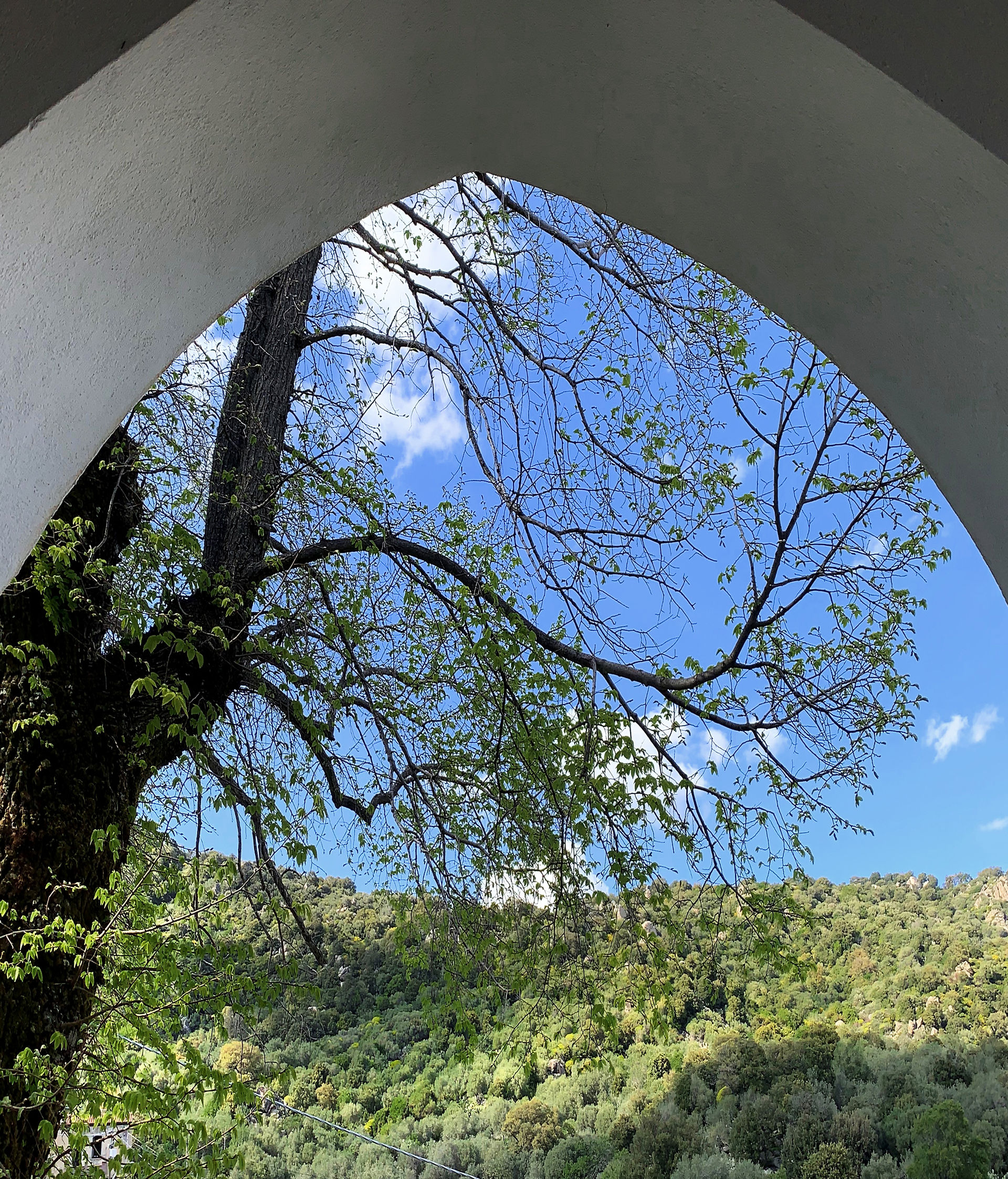
The little houses, with their sloping roofs covered in clay tiles and doorways with stone lintels, are clustered around the Church of Santa Maria Maddalena. Inside, a statue of the Saint stands in the large central niche of the high altar; as shown by the original inscription on its pedestal, the statue dates back to 1601.


Una sosta al fresco del porticato e poi via, tra i vicoli in salita e in discesa, ruderi pieni di fascino ricoperti di vegetazione incolta che lascia intravedere vecchi cortili e piccoli orti abbandonati. Tra le poche case ancora vissute, asinelli, polli, maiali, cavalli e cani simpatici.

Bonaria mi spiega i nomi delle piante che via via incontriamo, ecco l'Allium Subhirsutum che si riconosce dai fiorellini bianchi ed ha delle foglie commestibili con cui fare delle ottime frittate.


A pause in the cool shade of the porch and then we are off again, through the winding lanes that climb and drop. There are ruins full of charm, covered in wild greenery that offers glimpses of old courtyards and small, abandoned vegetable gardens. Among the few houses still lived in, there are donkeys, chickens, pigs, horses, and friendly dogs.

Bonaria explains the names of the plants we come across as we walk; here is the Allium Subhirsutum, which can be recognized by its tiny white flowers and has edible leaves that make excellent omelettes.


Camminando, leggiamo le tavole sparse nel paese con i testi di Grazia Deledda tratti dal libro "La madre", ambientato proprio in questo borgo. Mi hanno sempre colpito i dettagli delle sue descrizioni ed eccoci qua, dopo oltre cento anni dalla scrittura di quelle pagine piene di pathos, nella Lollove sospesa tra il Medioevo e l’oggi e su cui aleggia una ‘cappa’ di inquietudine e mistero.

Intanto siamo arrivate davanti alla casa più bella del paese, le splendide aloe sono fiorite e dalla porta aperta si intravede una cucina d'altri tempi.


As we walk, we read the wooden plaques scattered through the village, featuring words by Grazia Deledda from her book "The Mother", which was set right here in this hamlet. I have always been struck by the detail in her descriptions, and here we are, more than a hundred years after she wrote those pages so full of pathos, in a Lollove suspended between the Middle Ages and today, where an air of restlessness and mystery seems to linger.


Si affaccia una donna, immagino che siano in molti a curiosare, ma l'ospitalità sarda prevale sulla riservatezza e Grazia ci invita nella sua cucina dove non mancano i ritratti di famiglia e tanti utensili appesi ai muri.


A woman looks out; I imagine many people come to peer inside, but Sardinian hospitality overcomes natural reserve, and Grazia invites us into her kitchen, filled with family portraits and many utensils hanging from the walls.


Si respira il tempo passato. Un'occhiata anche alla camera da letto dove colpisce la biancheria sontuosa, ricamata da lei stessa.


You can feel the breath of times gone by. A glance into the bedroom, too, reveals lavish linens, beautifully embroidered by her own hands.


Girando lo sguardo intorno penso alle stagioni che si sono avvicendate tra queste mura e alle generazioni che l'hanno abitate. Sono sicura che gli occhi di Grazia vedono ancora in ogni angolo della casa quelle presenze sovrapposte nel tempo: una nonna che impasta il pane, un bambino cullato da una giovane mamma, un uomo che accende il camino.. "..la paziente storia dei giorni che un mite calore accende, d’affetti e di memorie".

Guardo un quadretto grazioso appeso al muro, Grazia segue il mio sguardo: "Una volta dipingevo e disegnavo, ora preferisco cucire, sto facendo una coperta per mia nipote". Prima di salutarci, ci offre dei dolcetti locali, che chiamano Aranzada, fatti di scorze d'arancio candite, mandorle e miele e ci ripromettiamo di tornare a trovarla la prossima volta che andremo a Lollove.


Looking around, I think of the seasons that have unfolded within these walls and the generations that have lived here. I am certain that Grazia’s eyes can still see, in every corner of the house, those presenze layered over time: a grandmother kneading bread, a young mother cradling her baby, a man lighting the hearth... "..the patient story of days lit by a gentle warmth, of affections and memories".

I look at a charming little picture hanging on the wall, and Grazia follows my gaze: "I used to paint and draw, but now I prefer to sew; I am making a blanket for my granddaughter." Before we say goodbye, she offers us some local sweets called Aranzada, made of candied orange peel, almonds, and honey, and we promise to visit her again the next time we come to Lollove.


E' la fine del pomeriggio, ci fermiamo ad ammirare un ciliegio in fiore accanto a un cancello e a chiacchierare con le due donne della casa. La conversazione cade su riti locali magico-religiosi e naturalmente sulla famosa maledizione gettata sul paese.

Sembrerebbe che Lollove sia quasi un borgo fantasma oggi, per colpa di alcune suore francescane ‘penitenti’, che in seguito alle accuse degli abitanti di relazioni carnali avvenute con i pastori del luogo, fuggirono dal monastero lanciando su Lollove questa maledizione: “Lollove as a esser chei s’abba è su mare: no as a crescher nen parescher mai!’ (Lollove sarai come acqua del mare; non crescerai e non morirai mai).

La leggenda è divenuta realtà: il borgo si è lentamente svuotato, pur resistendo alla scomparsa,

Da quello che dicono le due donne con cui stiamo parlando, sembra che le testimonianze delle anziane di Lollove confermino la leggenda che corrisponde a fatti veri tramandati nel tempo. Il giudizio delle due donne però è opposto: per una le suore si erano innamorate dei pastori, per l'altra erano donne poco serie. Su una cosa invece sono d'accordo entrambe: nei ruderi dove una volta c'era il convento e le cellette delle suore, ci sono inspiegabili presenze e si sentono strani lamenti; qualcuno del paese ha provato a passare la notte lì ma è scappato a gambe levate.


It is the late afternoon; we stop to admire a blossoming cherry tree beside a gate and to chat with the two women of the house. The conversation turns to local magical-religious rituals and, naturally, to the famous curse cast upon the village.

It seems that Lollove is almost a ghost town today because of some Franciscan ‘penitents’ nuns. Following accusations from the inhabitants of carnal relations with local shepherds, they fled the monastery, casting this curse upon Lollove: “Lollove as a esser chei s’abba è su mare: no as a crescher nen parescher mai!’ (Lollove, you shall be like the water of the sea; you shall never grow, and you shall never die). The legend became reality: the village slowly emptied, yet resisted vanishing completely.

From what the two women we are talking to say, the testimonies of Lollove's elderly women seem to confirm that the legend corresponds to true events passed down through time. However, the two women hold opposite views: for one, the nuns had fallen in love with the shepherds; for the other, they were loose women. Yet, there is one thing they both agree on: in the ruins where the convent and the nuns' small cells once stood, there are inexplicable presences and strange laments can be heard; some locals tried to spend the night there but fled as fast as their legs could carry them.


Ripensando alla maledizione, mi si affollano immagini nella mente, vorrei farlo questo film, vedo già la prima scena:


> Le suore camminano a capo chino, una dietro l'altra, sulla salita che porta alla chiesa. Il vento forte agita i veli scuri, trattenuti dalle mani arrossate dal freddo. Una suora minuta, rimasta po' indietro, si affretta per raggiungere le consorelle, saltellando tra le pietre che abbondano sul cammino. All'improvviso un forte belato mescolato al suono di campanelle irrompe nella strada, un giovane pastore sta scendendo la china con un minuscolo gregge; la suora in coda alle altre, alza lo sguardo verso un agnellino che trotterella accanto alla madre, il viso circondato da una fascia bianca appare in luce, giovanissimo e pallido. Tutto avviene in un attimo, la suorina inciampa su una pietra, ma una mano forte afferra il suo braccio e quasi la solleva. Suor Floris, questo è il suo nome, spalanca gli occhi verso chi l'ha salvata dalla caduta rovinosa. Gli occhi di lui la scrutano con pupille scure piene di sorpresa, lei si sente senza peso in quella grande mano che ancora le stringe il braccio. E' un attimo lungo come una vita, sospeso sul destino di entrambi e subito interrotto dal richiamo della Madre francescana: "Suor Floris! Suor Floris!". La piccola suora si affretta verso le consorelle, il capo chino per nascondere il bruciore che le arrossa le guance, timorosa che si possano sentire i battiti forti che le rimbombano nel petto. <


Parte 2

> Quella sera, rinchiusa nella piccola cella semibuia, suor Floris raccoglie tutte le sue forze nella preghiera. Mentre implora aiuto con voce fievole, la testa china sulle mani giunte e gli occhi chiusi, il suo corpo delicato, inginocchiato per terra accanto al letto, trema sotto la camiciola di lino spesso, ma non è l'umido che sale dal pavimento e trasuda dai muri, piuttosto un'agitazione interiore che non l'ha mai lasciata da quando è successo "quel fatto". Che lei stessa non sa come chiamare, perché è qualcosa che non conosce, che non ha mai vissuto prima.

Ha lasciato la misera cena nel piatto stasera, il suo stomaco in subbuglio non le permetteva di inghiottire nulla, e solo suor Zillia, l'altra giovane novizia con cui ha condiviso i voti, si è accorta del suo turbamento; lei però ha abbassato lo sguardo di fronte alla sua occhiata interrogativa.

Si infila nel piccolo letto, solo gli occhi emergono dalle coperte ruvide e fissano la fiamma della candela, che riverbera di riflessi dorati il biancore della fronte.; non appena li chiude, le appare quel viso. Alla fine, esausta, incrocia le braccia sul petto fragile, come le ha insegnato Suor Lucia: "Così gli angeli" le aveva detto "terranno al sicuro il tuo corpo dai demoni del peccato".

Si addormenta finalmente all'alba con il viso del pastore nella mente: "Santa Maria Maddalena aiutami tu a tenere lontani i cattivi pensieri".


Nella stessa notte qualcun altro fatica a dormire. Sdraiato per terra nel rifugio dei pastori, Anniccu fissa il fuoco che crepita al centro del piccolo spazio; gli altri dormono già sulle loro stuoie, avvolti nei gabbani, lungo le pareti rotonde del cuvile. Dore russa rumorosamente come al solito, se gli avesse detto la ragione della sua inquietudine, l'avrebbe preso in giro, lui che ama le ragazze prosperose e ammiccanti, a cui riesce sempre a carpire qualche bacio dietro il lavatoio, e anche qualcosa in più. Se ne vanta poi con gli altri, descrivendo con allusioni pesanti la forma di quel seno o di quei glutei, riscuotendo commenti e risate. E poichè lui non partecipa alle confidenze tra maschi, Dore lo redarguisce con una risata che rasenta lo scherno: "Anniccu...S’amori nou ci bogada su becciu", "L'amore nuovo cancella quello vecchio". Anche se lo dice con affetto, perchè si conoscono da quando sono nati ed è l'unico a sapere che il primo amore di Anniccu ha segnato tutta la sua infanzia.

Inquieto per quella mancanza di sonno inusuale per lui, Anniccu cerca di dormire, ma gli occhi spalancati verso i formaggi appesi a maturare sui ganci sopra il fuoco, non si vogliono chiudere. Conta i rami di ginepro e le canne che si innalzano dal muretto basso di pietre a formare il cono che è parete e tetto, ma non c'é nulla che riesca a cancellare quel piccolo viso pallido dagli occhi profondi e innocenti, che è comparso nella sua vita quel pomeriggio. Si rimprovera stizzito che non può essere così stupido, lei é poco più di una bambina, e soprattutto é una suora! Si gira su un fianco e si impone di dormire.<


Thinking back to the curse, images crowd my mind. I would love to make this film; I can already see the opening scene:


The nuns walk with heads bowed, one behind the other, up the slope leading to the church. A strong wind whips their dark veils, held tight by hands reddened by the cold. A petite nun, left slightly behind, hurries to catch up with her sisters, skipping between the stones that strew the path. Suddenly, a loud bleating mixed with the sound of bells breaks into the street; a young shepherd is coming down the slope with a tiny flock. The nun at the back of the line looks up at a lamb trotting beside its mother; her face, framed by a white wimple, catches the light, appearing very young and pale. It all happens in an instant: the little nun stumbles on a stone, but a strong hand catches her arm and almost lifts her up. Sister Floris—for that is her name—opens her eyes wide at the man who saved her from a nasty fall. His dark eyes search hers, filled with surprise; she feels weightless in that large hand still gripping her arm. It is a moment as long as a lifetime, suspended over both their destinies, and instantly broken by the call of the Franciscan Mother: "Sister Floris! Sister Floris!" The young nun rushes towards the others, her head bowed to hide the burning redness on her cheeks, terrified that they might hear the heavy pounding echoing in her chest.

Part 2

That evening, shut away in her small, dim cell, Sister Floris gathers all her strength in prayer. As she begs for help in a faint voice, her head bowed over clasped hands and her eyes closed, her delicate body, kneeling on the floor beside the bed, trembles beneath her thick linen shift. Yet it is not the dampness rising from the floor and sweating from the walls, but rather an inner restlessness that has not left her since "that event" took place—something she does not even know how to name, because it is something she does not know, something she has never experienced before.

She left her meager supper on her plate tonight, her troubled stomach refusing to let her swallow anything. Only Sister Zillia, the other young novice with whom she shared her vows, noticed her distress; yet Floris lowered her gaze before her questioning look.

She slips into her small bed, only her eyes showing above the rough blankets, staring at the candle flame that reflects golden light onto the whiteness of her forehead. The moment she closes them, that face appears. Finally, exhausted, she crosses her arms over her fragile chest, just as Sister Lucia taught her: "In this way," she had told her, "the angels will keep your body safe from the demons of sin."

She finally falls asleep at dawn with the shepherd's face in her mind: "Holy Mary Magdalene, help me keep the bad thoughts away."

On that same night, someone else is struggling to sleep. Lying on the ground inside the shepherds' shelter, Anniccu stares at the fire crackling in the centre of the small space; the others are already asleep on their mats, wrapped in their heavy cloaks along the round walls of the stone hut. Dore snores loudly as usual. If Anniccu had told him the reason for his restlessness, Dore would have mocked him—he who loves plump, winking girls, from whom he always manages to steal a few kisses behind the washhouse, and even a little more. He then boasts about it with the others, describing the shape of a breast or a hip with heavy innuendos, drawing comments and laughter. And since Anniccu does not share in these manly confidences, Dore chides him with a laugh that borders on mockery: "Anniccu... S’amori nou ci bogada su becciu", "A new love erases the old one." Even so, he says it with affection, because they have known each other since birth, and he is the only one who knows that Anniccu's first love marked his entire childhood.

Restless from this lack of sleep, so unusual for him, Anniccu tries to rest, but his eyes, wide open towards the cheeses hanging to mature on hooks above the fire, refuse to close. He counts the juniper branches and reeds rising from the low stone wall to form the cone that serves as both wall and roof, but nothing can erase that small, pale face with deep, innocent eyes that entered his life that afternoon. He crossly tells himself that he cannot be so foolish; she is little more than a child, and above all, she is a nun! He turns onto his side and forces himself to sleep.


Continua...

To be continued...


" Ratio ordinis rerum in finem (cf. I, 23,1 c.) La predestinazione è una parte della provvidenza"

"Ratio ordinis rerum in finem" (The reason for the order of things towards their end). Predestination is a part of providence.


***


Prima di ripartire da Lollove, io e Bonaria ci sediamo sulle panche fresche della fontana del paese, un venticello fresco muove le fronde dei grandi alberi intorno e il gorgoglio dell'acqua di sorgente accarezza la pace profonda.

Arrivederci magica Lollove.


Before leaving Lollove, Bonaria and I sit on the cool benches by the village fountain. A fresh breeze moves the leaves of the large trees around us, and the gurgling of the spring water gently touches the deep peace.

Goodbye, magical Lollove.


***


DORGALI: INCONTRO CON L'OSPITALITA' SARDA

Mi sto dirigendo verso Dorgali tra cime di pietra rossa e comunità di cisti, lecci e ginepri. Anche i boschetti di sugheri coronano la regalità del territorio del Supramonte che si estende ai lati di una strada infinita di tornanti.


DORGALI: AN ENCOUNTER WITH SARDINIAN HOSPITALITY

I am heading towards Dorgali among peaks of red stone and clusters of cistus, holm oaks, and junipers. Groves of cork trees also crown the majesty of the Supramonte territory, which stretches along both sides of an endless road of hairpin bends.


All’inizio emozionano i bordi fioriti di oleandri, poi quelli abbaglianti delle ginestre, la cui presenza entra dai finestrini spalancati con un profumo inebriante.


At first, the borders blooming with oleanders are a moving sight, then come the dazzling yellow brooms, whose presence drifts through the wide-open windows with an intoxicating scent.


Non smetto di annusarlo con inspirazioni profonde, poi rido tra me e me, pensando che sto facendo un fantastico areosol di fiori.

Passando sopra un ponte, lancio un’occhiata giù pensando di vedere il solito alveo asciutto, invece c’è dell'acqua, da dove spuntano centinaia di oleandri fioriti; trovo un piccolo spiazzo per fermarmi a guardarli. Sembrano danzatrici in fila, le fronde verso il cielo come braccia mutate in rami, i tronchi sembrano corpi aggraziati ricoperti di corteccia leggera. Mi fanno pensare alla meravigliosa scultura del Bernini e a Dafne, la ninfa trasformata in un albero per sfuggire al desiderio di Apollo.

Proseguo verso il paese sempre più rapita dal paesaggio; abbondanza di bellezza per un borgo che appare distratto.


I cannot stop breathing it in with deep breaths, then I laugh to myself, thinking that I am having a fantastic flower aerosol.

Crossing over a bridge, I glance down expecting to see the usual dry riverbed, but instead there is water, from which hundreds of blooming oleanders emerge; I find a small clearing to stop and look at them. They look like dancers in a row, their branches reaching towards the sky like arms turned into boughs, their trunks like graceful bodies covered in light bark. They make me think of Bernini’s wonderful sculpture and of Daphne, the nymph transformed into a tree to escape Apollo’s desire. I continue towards the village, more and more captivated by the scenery; an abundance of beauty for a town that appears distracted.


A Dorgali mi accoglie la calda ospitalità di Bertina e Pierpaolo. Le colazioni pantagrueliche di Bertina spaventerebbero anche un Serial Eater, ma la sua grazia e il suo sorriso non permettono un rifiuto.


In Dorgali, I am welcomed by the warm hospitality of Bertina and Pierpaolo. Bertina’s pantagruelian breakfasts would scare even a serial eater, but her grace and smile make it impossible to refuse.


IDR


ONIFERI: INCONTRO CON LE JANAS

Pierpaolo mi invita a visitare le Domus de Janas di Sas Concas, a Oniferi; si trovano in mezzo alla campagna e non sono segnalate, quindi difficili da raggiungere ma molto interessanti. Accetto con entusiasmo, inizia l'avventura.


Camminiamo nell'erba alta, mi hanno raccomandato di controllare spesso che nessuna zecca si sia infilata sotto i miei pantaloni. Me ne dimentico subito davanti a un fantastico campo fiorito di Daucus Carota, un fiore che amo moltissimo per la sua delicatezza che fa pensare a una trina formata da centinaia di fiorellini bianchi raccolti intorno ad uno centrale rosso scuro.


ONIFERI: AN ENCOUNTER WITH THE JANAS

Pierpaolo invites me to visit the Domus de Janas of Sas Concas, in Oniferi; they are located in the middle of the countryside and are not signposted, making them difficult to reach but very interesting. I accept with enthusiasm, and the adventure begins.

We walk through the tall grass, and I have been advised to check often to make sure no ticks have slipped under my trousers. I forget all about it the moment I face a fantastic field blooming with Queen Anne's lace. It is a flower I love dearly for its delicacy, which brings to mind a piece of lace formed by hundreds of tiny white flowers gathered around a single, dark red central one.


I fiori hanno delle piccole ghiandole profumate che attirano gli insetti e dopo la fecondazione si chiudono come minuscoli nidi d'uccello. Il Daucus è anche una pianta medicinale e cresce in tutto il mondo sin dall'alba del mondo, ne è stato trovato uno fossile di 1,3 milioni di anni sull'isola di Madeira, nell'Oceano Atlantico.


The flowers have tiny scented glands that attract insects, and after fertilization, they close up like miniature birds' nests. Daucus is also a medicinal plant and has grown across the globe since the dawn of time; a fossil dating back 1.3 million years was found on the island of Madeira, in the Atlantic Ocean.


In mezzo a questo campo fiorito il sito delle Domus de Janas appare come in un dipinto, invece è reale, siamo qui e quelle minuscole porte scavate nella roccia rossa, sono le entrate delle "case delle fate", le antiche tombe, che la narrazione popolare vuole abitate da minuscole fate.


In the middle of this blossoming field, the site of the Domus de Janas looks like a painting, yet it is real. We are here, and those tiny doors carved into the red rock are the entrances to the "fairy houses"—ancient tombs that popular folklore believes were inhabited by tiny fairies.


Le Domus sono numerose, disseminate in questo costone di trachite che attraversa la campagna, Maria Giovanna e Pierpaolo si arrampicano dentro, io li seguo, bisogna proprio entrarci per capire le loro minuscole dimensioni.


The Domus are numerous, scattered across this trachyte ridge that cuts through the countryside. Maria Giovanna and Pierpaolo climb inside, and I follow them; you truly have to step inside to understand their tiny dimensions.


Rannicchiata dentro una delle Domus, osservo i codici misteriosi incisi sulle pareti.

Li chiamano i "capovolti", ovvero uomini stilizzati a testa in giù, che dovrebbero rappresentare gli antenati defunti in procinto di raggiungere l’ ultra terreno. Sembra che l’interpretazione del “capovolto” trovi un riferimento nell’ideologia funeraria egizia, che concepiva il regno dei morti come il mondo dei capovolti. Potrebbe essere che questa ideologia sia proseguita attraverso gli Etruschi fino a influenzare la Magna Grecia e che i Sardi abbiano fatta propria questa concezione, magari trasmettendola a loro volta.


Huddled inside one of the Domus, I observe the mysterious codes carved onto the walls.

They call them the "upside-down men"—stylized figures carved head downwards, which are believed to represent deceased ancestors on their journey to the afterlife. It seems that this interpretation of the "upside-down man" finds a parallel in ancient Egyptian funerary beliefs, which envisioned the realm of the dead as an inverted world. It could be that this ideology endured through the Etruscans, eventually influencing Magna Graecia. The Sardinian people may well have adopted this concept, perhaps even passing it on in their turn.


Pierpaolo mi racconta che un professore francese, un ricercatore che ha accompagnato qui, gli ha spiegato che se si uniscono le voci si può sentire il magnetismo di questo luogo; e allora proviamoci.


Pierpaolo tells me that a French professor, a researcher he accompanied here, explained to him that if you join your voices together, you can feel the magnetism of this place; so, let's give it a try.


La sensazione è di viaggiare tra passato, presente e futuro, che il tempo non esista.

Credo che ci muoviamo tutti in una misteriosa danza cosmica.


The feeling is of travelling between past, present, and future, as if time does not exist.

I believe we are all moving in a mysterious cosmic dance.


***


VILLAPUTZU: INCONTRI A COLAZIONE

Nella grande casa di Marianna a Villaputzu, piena di oggetti antichi di artigianato sardo e di libri, aleggiano le presenze delle generazioni che l'hanno abitata. Stamattina, altri due ospiti sono in cucina, facciamo colazione insieme scambiandoci informazioni e aneddoti di viaggio. Lisa e Shahin sono svedesi e, tra un biscotto e l'altro, la conversazione scorre vivace come sempre quando dei viaggiatori si incontrano. Prima di salutarci mi invitano a Stoccolma, promettendo di portarmi con la loro barca in alcune isole poco conosciute e assolutamente da visitare. Mi siedo nel bellissimo giardino della casa, pensando che forse un giorno andrò nelle fredde terre del nord, ma per ora sono nel mio paradiso preferito, terra sarda!


VILLAPUTZU: ENCOUNTERS AT BREAKFAST

In Marianna’s large house in Villaputzu, filled with antique pieces of Sardinian craft and books, the presence of the generations that lived here seems to linger. This morning, two other guests are in the kitchen, and we have breakfast together, sharing travel tips and anecdotes. Lisa and Shahin are from Sweden, and between one biscuit and the next, the conversation flows with that lively warmth that always sparks when travellers meet. Before we say goodbye, they invite me to Stockholm, promising to take me on their boat to some lesser-known islands that are an absolute must-see. I sit in the beautiful garden of the house, thinking that perhaps one day I will travel to the cold lands of the north, but for now, I am in my favourite paradise—Sardinian land!


***


MURAVERA: INCONTRO CATARTICO

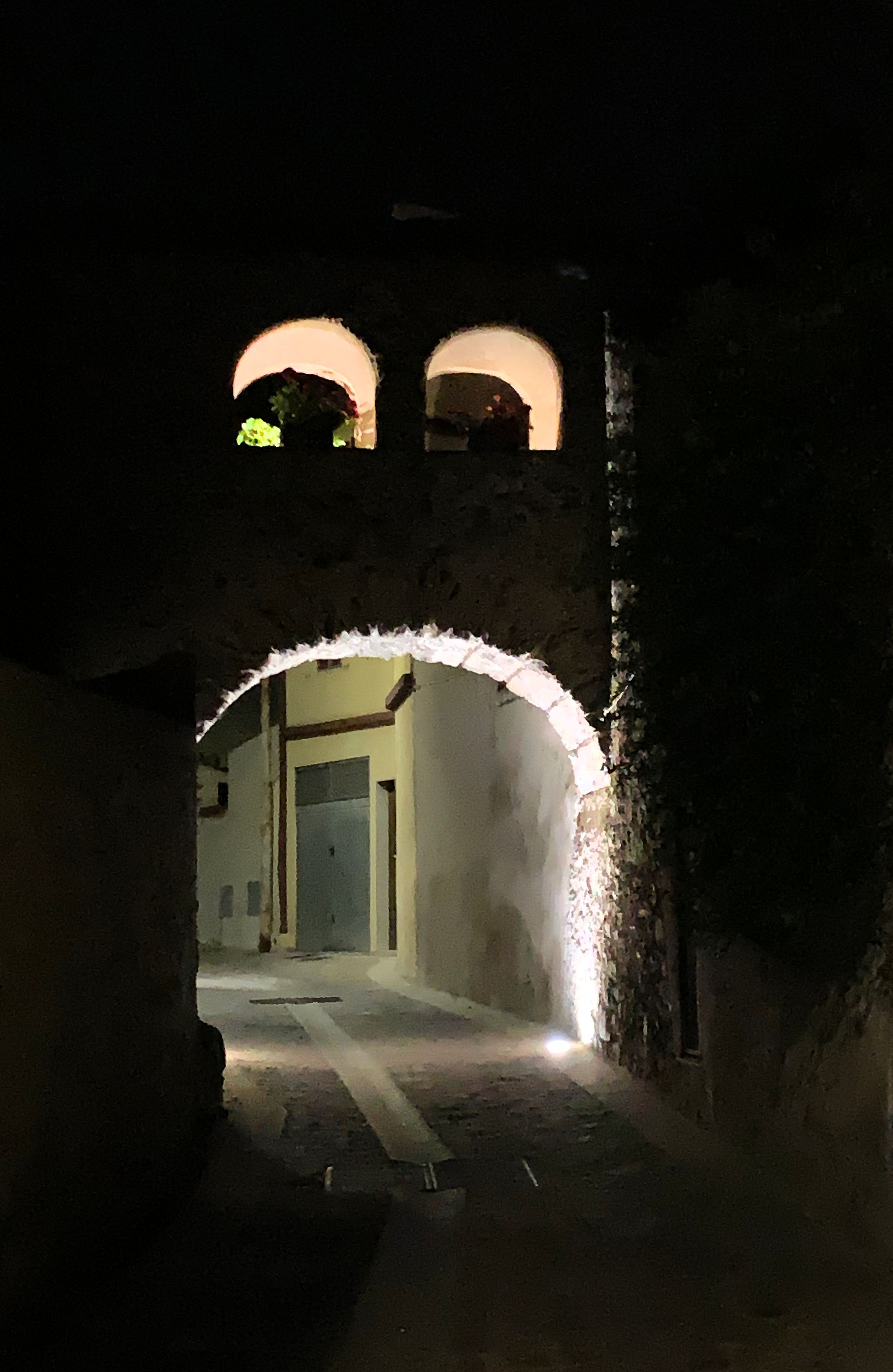
Oggi ho trascorso tutto il tempo inchiodata allo schermo del pc, ho dovuto riprendere le fila del mio lavoro, mail, meeting, un progetto impegnativo, ora è già tardi, ma ho bisogno di camminare. Mi dirigo verso sud, il primo paese che incontro è Muravera, parcheggio davanti a un vicolo che porta al centro storico e mi inoltro nell'intrico di stradine deserte e poco illuminate, il silenzio é profondo, le luci delle case spente. Amo camminare di notte, in questo vuoto di vita anche la mente tace e resta solo lo sguardo su questo pezzetto di mondo che sembra disabitato. Arrivo per caso davanti a un portico antico che unisce due case, belli anche i portali con l'arco a tutto sesto.

MURAVERA: A CATHARTIC ENCOUNTER

Today I spent the whole time glued to my computer screen, having to catch up with my work—emails, meetings, a demanding project. Now it is already late, but I need to walk. I head south, and the first town I reach is Muravera; I park in front of an alley leading to the historic centre and step into the tangle of deserted, dimly lit narrow streets. The silence is deep, the lights in the houses are off. I love walking at night; in this void of life, the mind falls silent too, leaving only my gaze upon this tiny piece of the world that seems uninhabited. By chance, I arrive in front of an ancient archway joining two houses; the round-arched portals are beautiful too.


E' proprio mentre sto scattando l'ennesima fotografia che un ragazzo entra nella mia inquadratura, giro lo sguardo, sono in due e sono piuttosto incuriositi dalla mia presenza, mi dicono che è strano vedere qualcuno in giro a quest'ora. Si presentano, Davide e Simone, vivono lì vicino. Cominciamo a chiacchierare, mi parlano del paese, della loro vita lì e della voglia che hanno di partire, un cane di una casa accanto non apprezza affatto la conversazione e si agita abbaiando a più non posso.

Davide mi invita a continuare la conversazione a casa sua, naturalmente rifiuto spiegando che non vado di notte a casa di uno sconosciuto. Allora mi propone di mettere delle sedie in strada davanti al cancello di casa, è lì accanto, accetto, si può fare.

Scopriamo di essere tutti e tre degli artisti, così mi propongono di scrivere qualcosa a sei mani. D'accordo, vediamo se ci riusciamo. Propongo di iniziare da "Non gli perdonai niente", una frase che Davide ha detto parlandomi della sua famiglia, perché nel momento in cui ha avuto più bisogno gli ha voltato le spalle.

Le frasi si compongono quasi da sole, Davide scrive a mano su un foglio e in questa sorta di creazione quasi catartica, Simone ascolta in silenzio, ma alla fine é lui a trovare il titolo:


It is just as I am taking yet another photograph that a young man enters my frame. I look around; there are two of them, and they are quite curious about my presence, telling me it is strange to see anyone around at this hour. They introduce themselves as Davide and Simone, and they live nearby. We begin to chat; they talk to me about the town, their life there, and their longing to leave. A dog from a neighbouring house does not appreciate our conversation at all, barking wildly and restlessly.

Davide invites me to continue our chat at his house. Naturally, I refuse, explaining that I do not go to a stranger's house at night. So he suggests putting some chairs out on the street in front of his house gate, which is right there. I accept; that can be done.

We discover that all three of us are artists, so they suggest we write something together, a six-handed piece. Alright, let's see if we can do it. I propose starting with "I forgave them nothing"—a phrase Davide used when speaking to me about his family, because when he needed them most, they turned their backs on him.

The sentences almost form themselves. Davide writes by hand on a piece of paper, and during this sort of almost cathartic creation, Simone listens in silence. Yet, in the end, it is he who finds the title:


CARENZA D’AMORE

Non gli perdonai niente

Questo sangue comune che mente

Un silenzio che manca d'amore

Di famiglia ha soltanto l'odore

Rifiutata la mano richiesta

La mia vita non era una festa

Ma alla fine la mente s'è desta

Il perdono nasceva improvviso

Quando tutto sembrava perduto

La mia pancia urlava un saluto

All'assurdo che avevo vissuto

Questo sangue comune che mente

Un silenzio che manca d'amore

Di famiglia ha soltanto l'odore

Ma la vita va avanti veloce

Ci divora. E' una belva feroce.

NON PERDEUSU TEMPU

E’ ORA DE COGLI SU ENTU


LACK OF LOVE

I forgave them nothing

This family blood that lies

A silence missing love

Only a scent of family

A helping hand denied

My life was no celebration

But in the end the mind awoke

Forgiveness was suddenly born

When all seemed lost

My gut screamed a greeting

To the absurdity I lived

This family blood that lies

A silence missing love

Only a scent of family

But life moves on fast

It devours us. It is a fierce beast.

NON PERDEUSU TEMPU

E’ ORA DE COGLI SU ENTU


Mentre rimaniamo in silenzio davanti a quella porta, penso che questo incontro nato nel buio di una strada deserta si è trasformato in uno scambio sincero tra artisti.

Noi tre sconosciuti abbiamo unito le parole e cambiato il dolore in speranza,

Ogni incontro lungo il cammino porta messaggi da ricevere, messaggi da dare.


As we stand in silence before that door, I think how this encounter, born in the darkness of a deserted street, turned into a sincere exchange between artists.

The three of us, strangers, joined our words and changed pain into hope.

Every encounter along the way brings messages to receive, messages to give.


Prima di ripartire, scatto le foto dei ragazzi, è stata una serata rara, speciale.

Le parole evocate direttamente dall'anima, senza filtri mentali, senza giochi di maschere.

Non so se Davide abbia davvero perdonato la sua famiglia, ma io spero di sì.


Before leaving, I take photos of the boys; it was a rare, special evening.

Words evoked directly from the soul, without mental filters, without any mask-playing.

I do not know if Davide has truly forgiven his family, but I hope he has.


***


Iscriviti per ricevere gli aggiornamenti e i consigli sulle mete più belle della Sardegna.

Sign up to receive updates and insights on the most beautiful destinations in Sardinia.


Scorri giù per leggere i commenti e lasciare il tuo.

Scroll down to read the comments and share your own thoughts.


Tutte le immagini e i testi originali Copyright © Solo Moles - Travel One 2026.

Tutti i diritti riservati.

All images and original texts Copyright © Solo Moles - Travel One 2026.

All rights reserved


Contatto Contact: solomoles@gmail.com


3 commenti


molesalex
25 mag 2022

Bellissimo tutto, bravissima la mia sorellina Gabriella

Mi piace

Ogni volta mi sorprendi, per la tua capacità di descrivere ciò che vedi e ciò che ti accade coinvolgendo chi ti legge: come se fosse accanto a te, come se provasse in sincrono le tue impressioni....

Mi piace

filippoconte.eu
05 gen 2022

Attraversare i tuoi diari e' sempre un viaggio stupefacente.

Questa volta dall'aerosol di fiori, ai miti greci fino alla meraviglia dei cibi sardi. Da uno spazio senza tempo a una poesia catartica.

Non vedo l'ora di leggere la tua prossima avventura.

Grazie!


Mi piace

Change language

bottom of page